Summer nights in Tenerife are made for looking up. As the sun sets over the volcanic landscape of Teide National Park and the sky gradually darkens, the first bright objects begin to appear above the horizon. Some are stars. Some are satellites. And sometimes, one object shines so brightly that visitors immediately ask the same question: “Is that a star?”
Very often, the answer is: no, it is Venus.
During the summer months of 2026, the evening sky from Tenerife offers a fascinating opportunity to observe several planets, especially in June and July. For visitors joining a Teide by Night stargazing experience, Venus is likely to be one of the easiest and most memorable planets to recognise. Bright, elegant and visible after sunset in the western sky, it is often one of the first celestial objects that guests notice before the deeper night sky reveals constellations, star clusters and the Milky Way.
This guide explains which planets are visible from Tenerife in summer 2026, why Venus is so special, and how a guided stargazing tour in Teide National Park can help you understand what you are seeing rather than simply looking at a bright point in the sky.
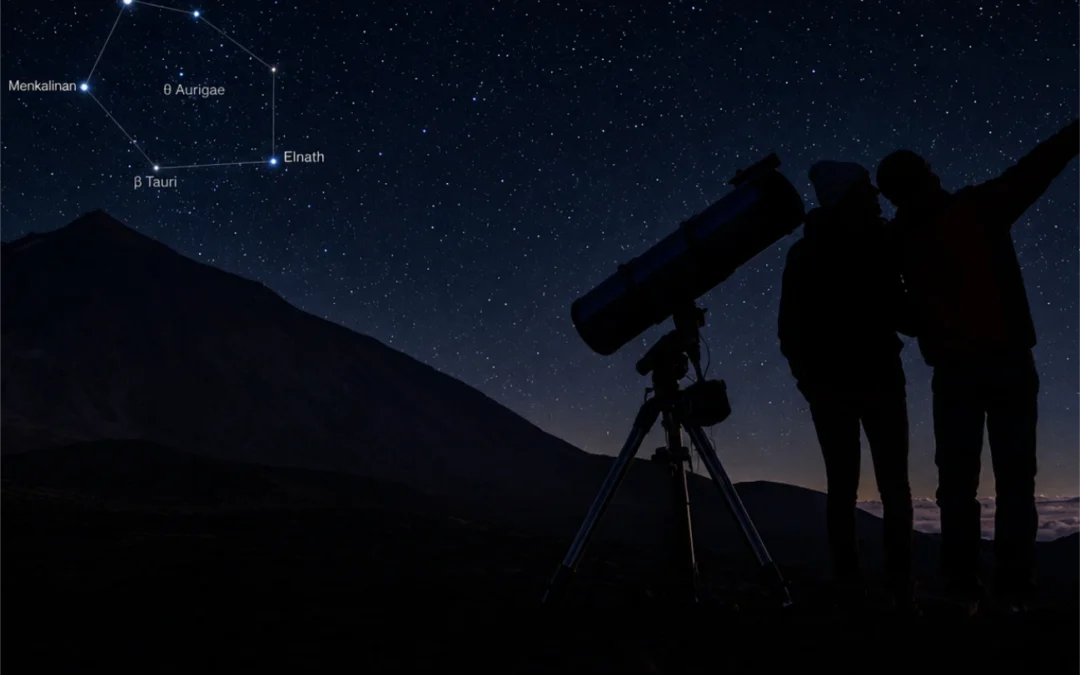
Read also our last article the Auriga Constellation.
Planets visible from Tenerife in summer 2026
The exact visibility of planets changes throughout the year because each planet moves along its own orbit. From Tenerife, summer 2026 is particularly interesting because several planets are positioned in a way that makes them visible either after sunset or before dawn.
For June and July 2026, the most relevant planets are:
- Venus — visible in the western sky after sunset and usually very easy to recognise.
- Jupiter — also visible in the evening sky, especially earlier in the season.
- Mercury — visible low in the western sky in June, although more difficult to spot.
- Mars — mainly a pre-dawn planet during this period.
- Saturn — more relevant before dawn, becoming easier later in the season.
- Uranus and Neptune — technically present, but not realistic naked-eye targets for most visitors.
For a typical Teide by Night evening experience, the most important planet is Venus, because it is bright, accessible and visible soon after sunset. Jupiter may also be visible depending on the date, while Mercury requires a very clear western horizon and careful timing.

Venus after sunset: the bright “evening star” over Tenerife
Venus is often called the “Evening Star” when it appears after sunset, although it is not a star at all. Venus is a planet — a rocky world orbiting closer to the Sun than Earth.
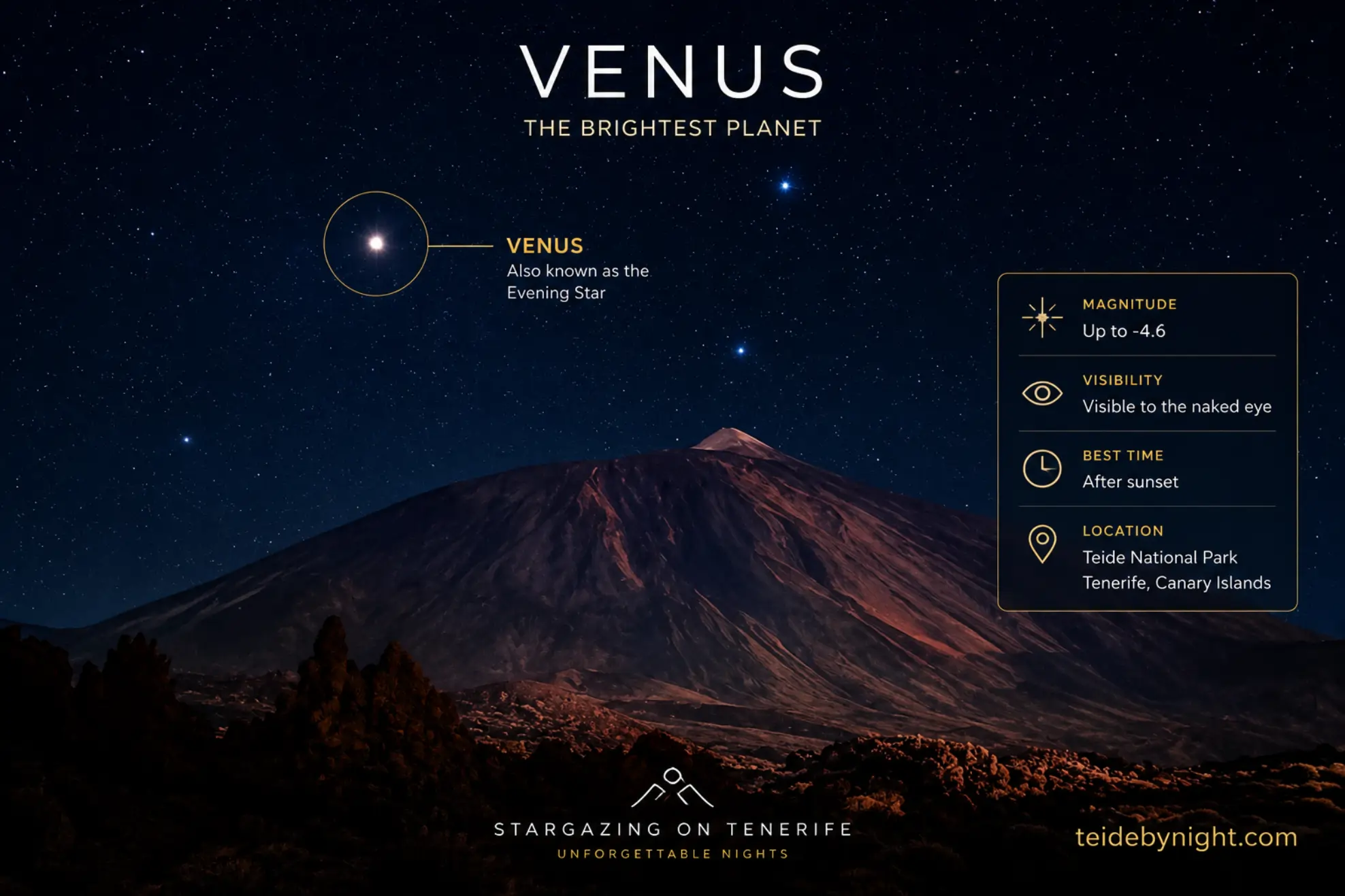
From Tenerife in June and July 2026, Venus can be seen in the western sky after sunset. It is one of the brightest natural objects in the night sky, outshining every star and often appearing before the sky is fully dark.
This makes Venus ideal for beginners. You do not need expert knowledge to spot it. Once your guide points it out, you will usually understand immediately why ancient cultures paid so much attention to it. It is bright, steady and visually striking, especially from a high-altitude setting such as Teide National Park.
Why Venus is easy to recognise
Venus is easy to recognise because:
- it is extremely bright;
- it appears low to medium-high in the western sky after sunset when visible as an evening object;
- it does not twinkle as strongly as many stars near the horizon;
- it often appears before most stars become visible.
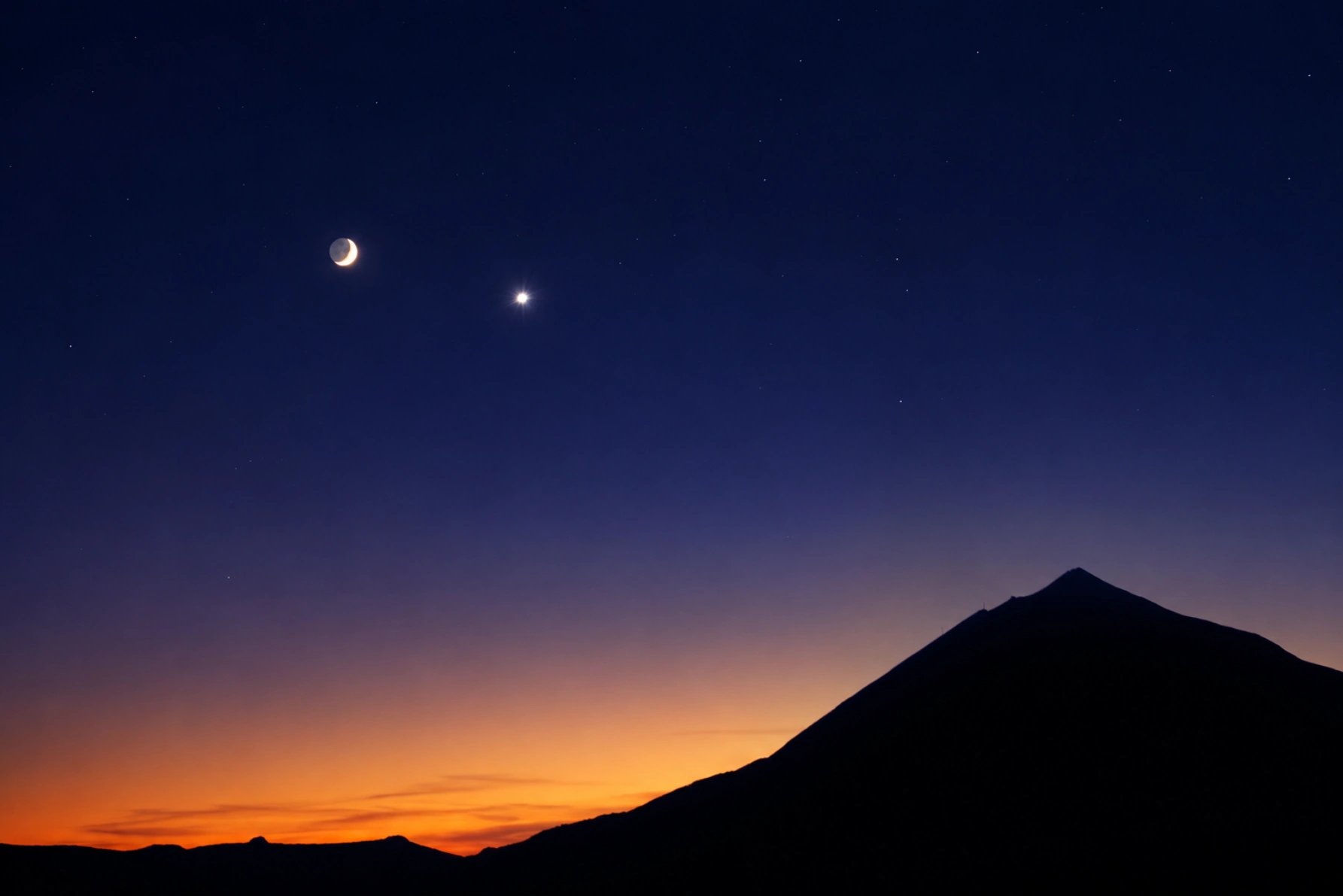
From Teide, the experience can be especially beautiful because the planet may appear above the dark outline of the volcanic landscape, sometimes close to the warm colours left by sunset.
Interesting facts about Venus
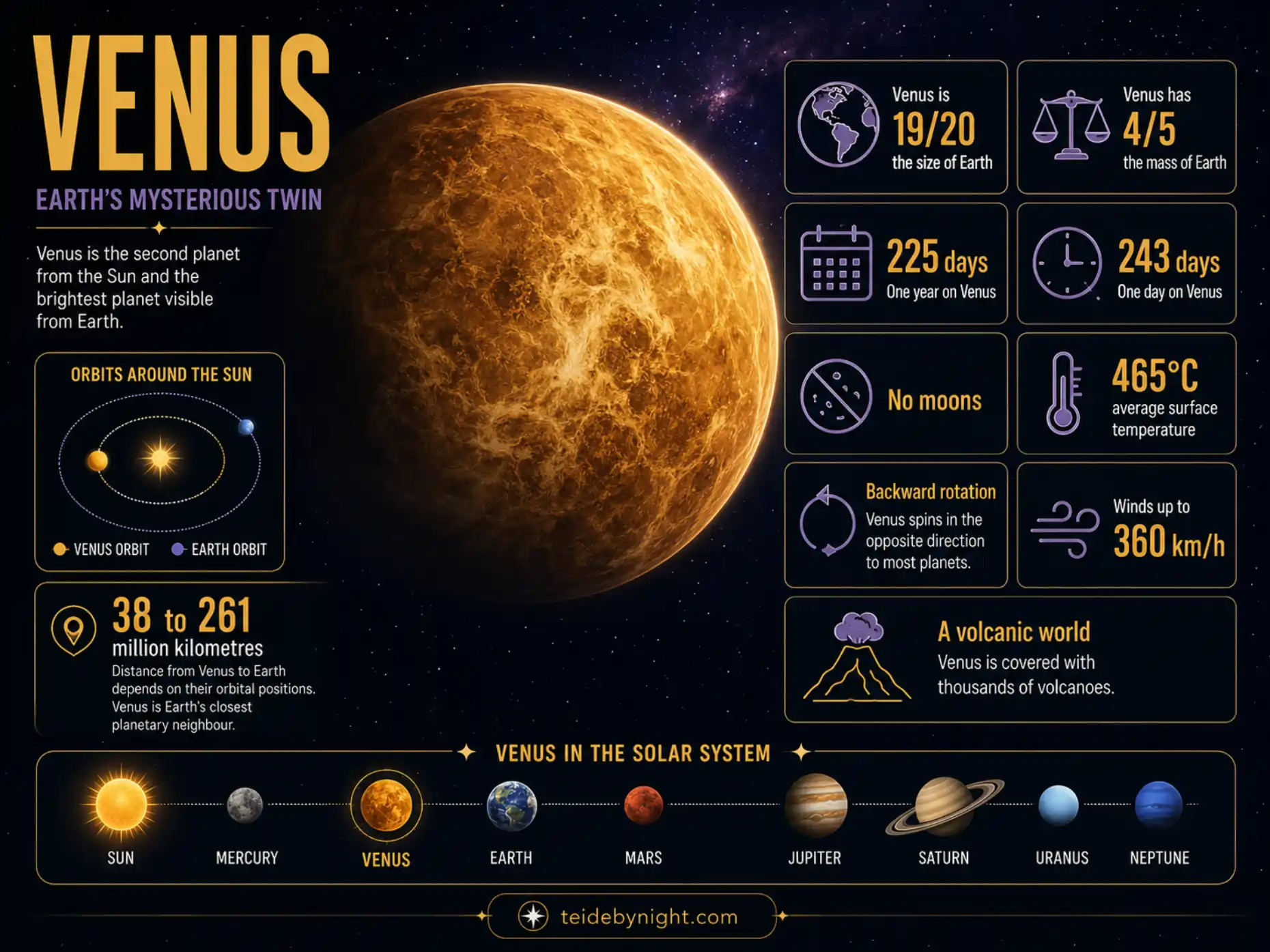
Venus is one of the most fascinating planets in the Solar System. It is often described as Earth’s “sister planet” because it is similar in size and mass, but in reality it is dramatically different.
Here are some important facts about Venus that make it such a powerful object to discuss during a stargazing evening.
Venus is a planet, not a star
This sounds obvious, but it is one of the most common questions during stargazing sessions. Because Venus is so bright, many people assume it must be a star. In fact, Venus is a planet that reflects sunlight back towards Earth.
Its brightness comes from several factors: it is relatively close to Earth, it is covered in highly reflective clouds, and it can appear at favourable angles in the evening or morning sky.
Venus is the hottest planet in the Solar System
One of the most interesting facts about the planet Venus is that it is hotter than Mercury, even though Mercury is closer to the Sun. The reason is Venus’s incredibly thick atmosphere.
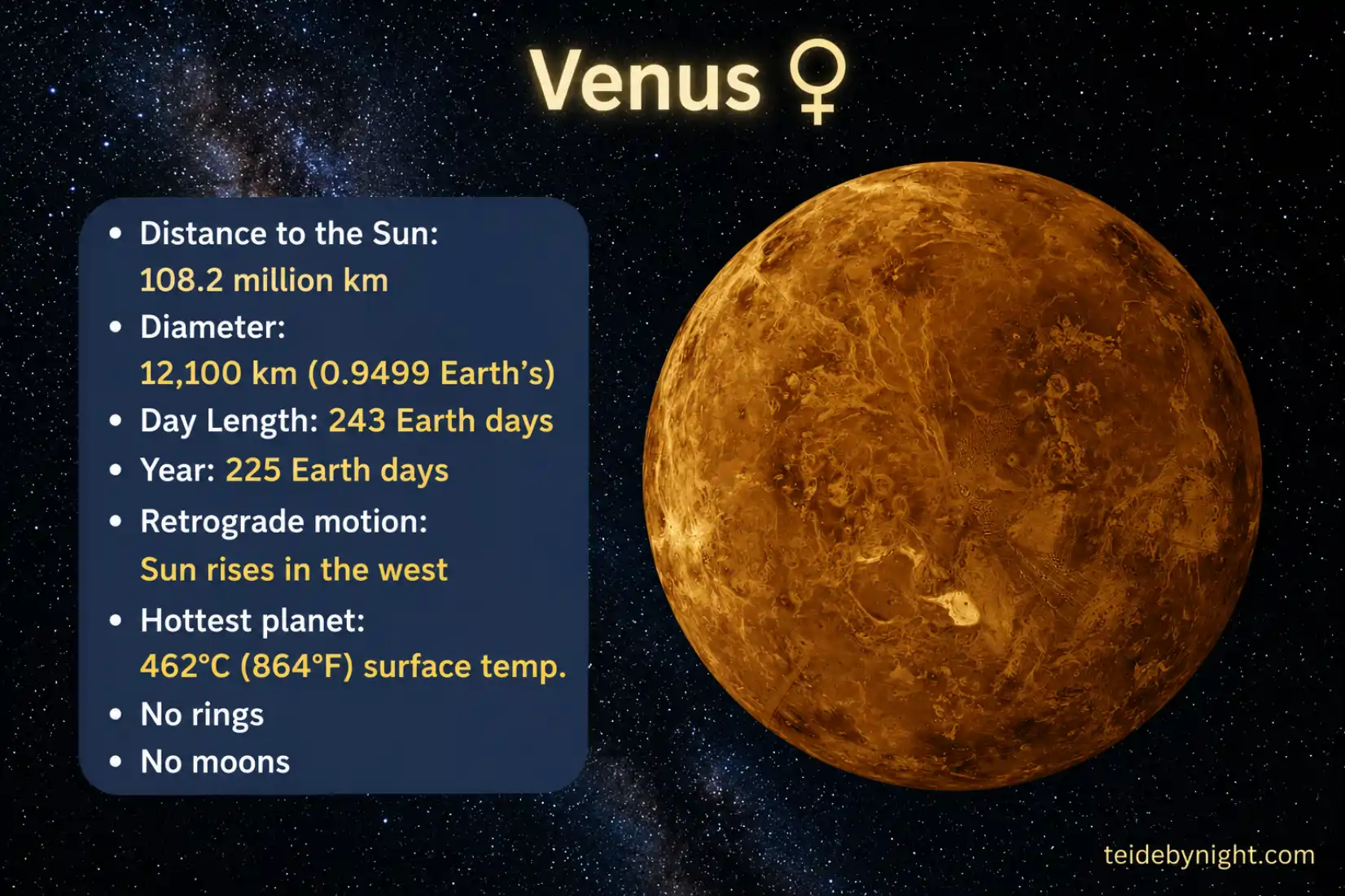
Venus has a dense atmosphere dominated by carbon dioxide, which traps heat in an extreme greenhouse effect. The surface temperature of Venus reaches around 467°C, hot enough to melt lead. This makes Venus the hottest planet in the Solar System.
For visitors observing Venus from the cool mountain air of Teide, this contrast is striking: you may be standing in a jacket under the night sky while looking at a world where the surface is hotter than an oven.
Venus has a crushing atmosphere
Another important fact about Venus is that its atmospheric pressure is extreme. The pressure on Venus’s surface is around 90 times greater than Earth’s sea-level pressure. In practical terms, standing on Venus would feel like being deep underwater under enormous pressure.
This is one reason why Venus is not a place humans could visit in any simple way. Spacecraft that have landed there have had to survive heat, pressure and corrosive atmospheric conditions.
Venus rotates backwards
Venus also rotates in the opposite direction to most planets. This is called retrograde rotation. On Venus, the Sun would rise in the west and set in the east — the reverse of what we experience on Earth.
Its rotation is also extremely slow. A day on Venus, measured by rotation, is longer than its year. That means Venus turns on its axis more slowly than it orbits the Sun.
Fun facts about Venus for a stargazing tour
A guided stargazing tour is not only about identifying objects. It is also about storytelling. Venus is perfect for this because it combines beauty, science and mystery.
Here are some fun facts about Venus that guests often enjoy:
Venus is sometimes mistaken for an aircraft
Because Venus is so bright and can appear low in the sky, people sometimes mistake it for an aircraft, a drone or even something unusual. But unlike a plane, Venus does not move quickly across the sky or flash with navigation lights.
Venus is covered in clouds
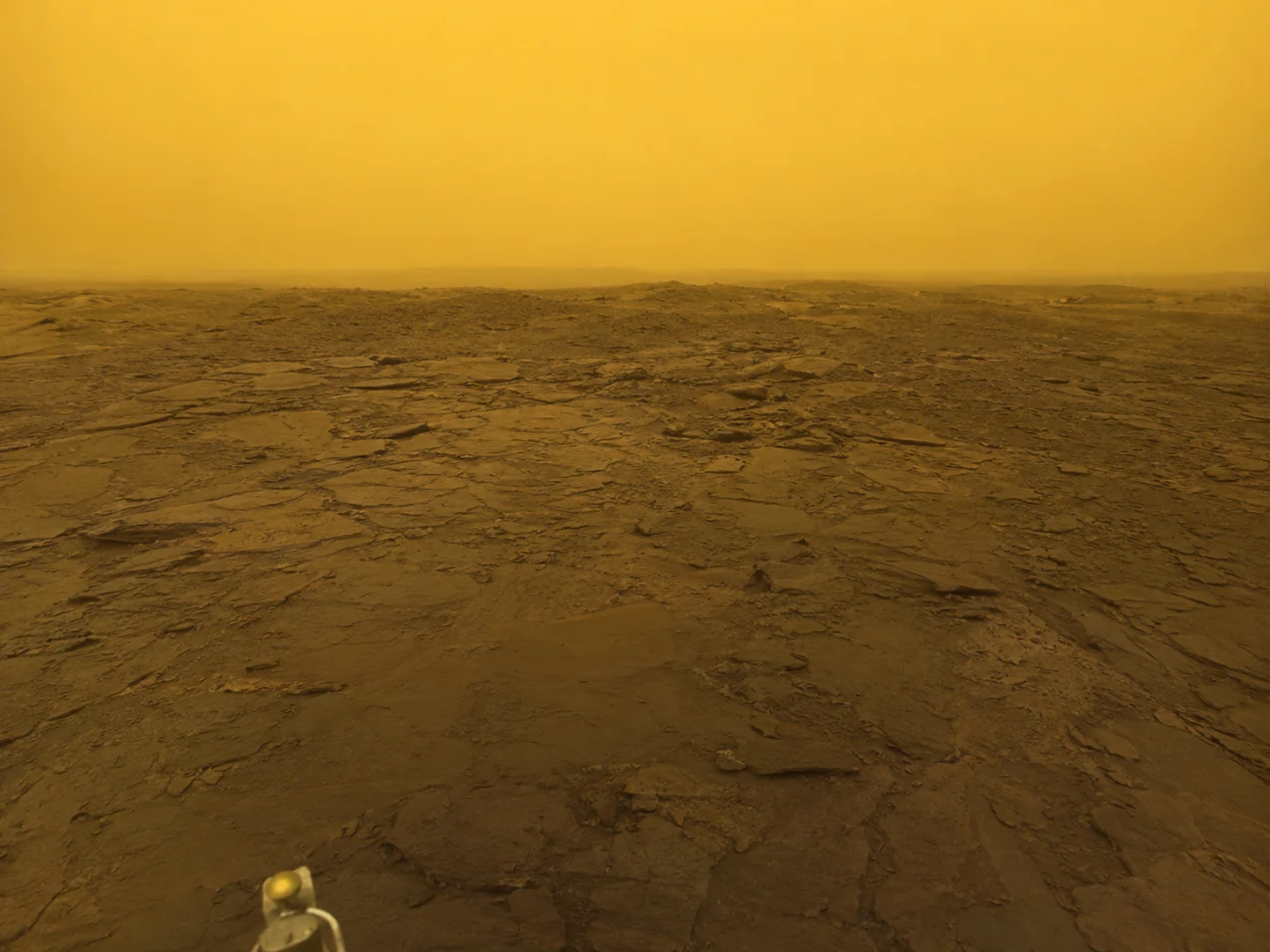
We cannot see Venus’s surface directly with normal telescopes because the planet is wrapped in thick clouds. These clouds reflect sunlight very efficiently, which helps make Venus so bright from Earth.
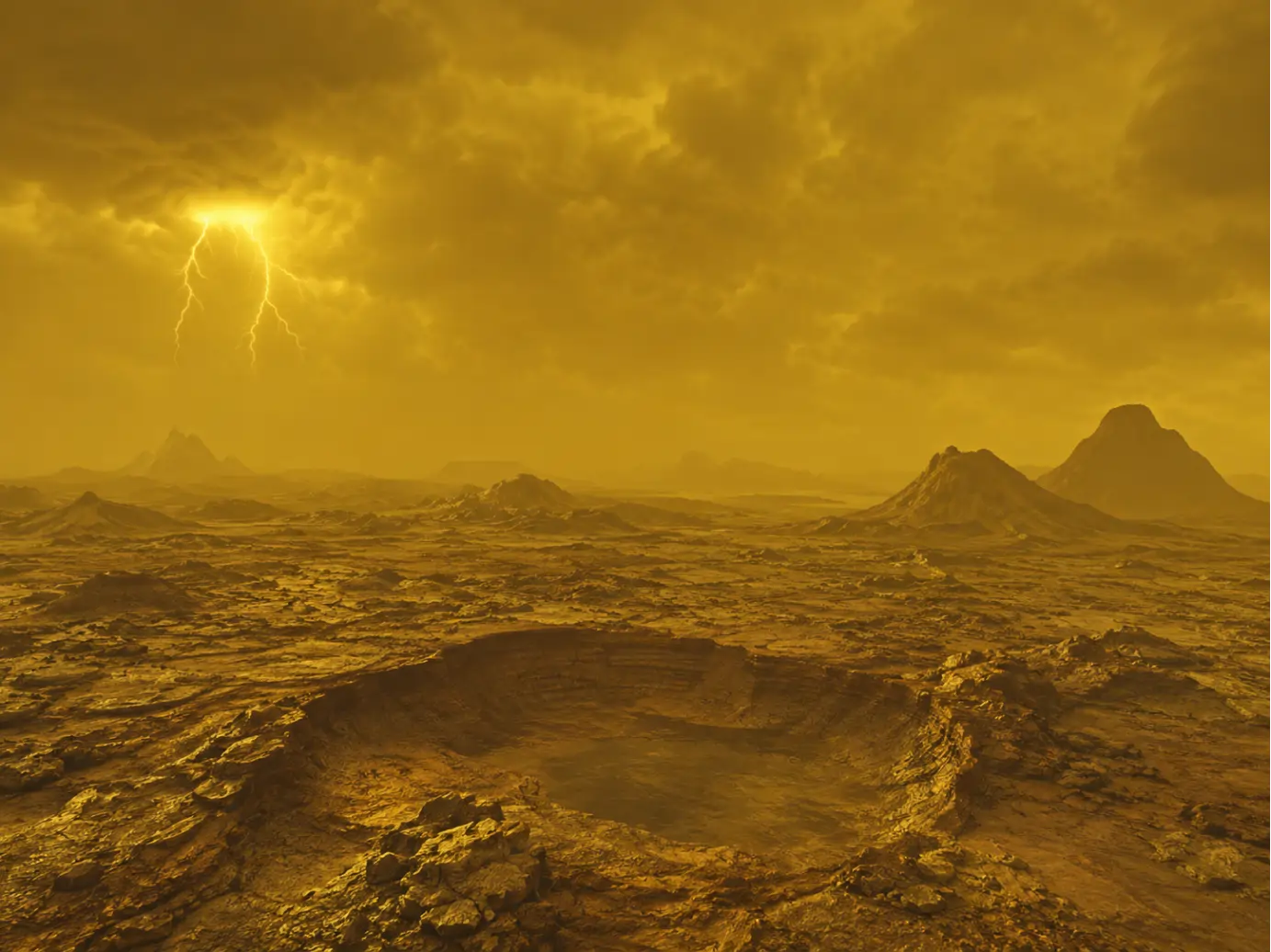
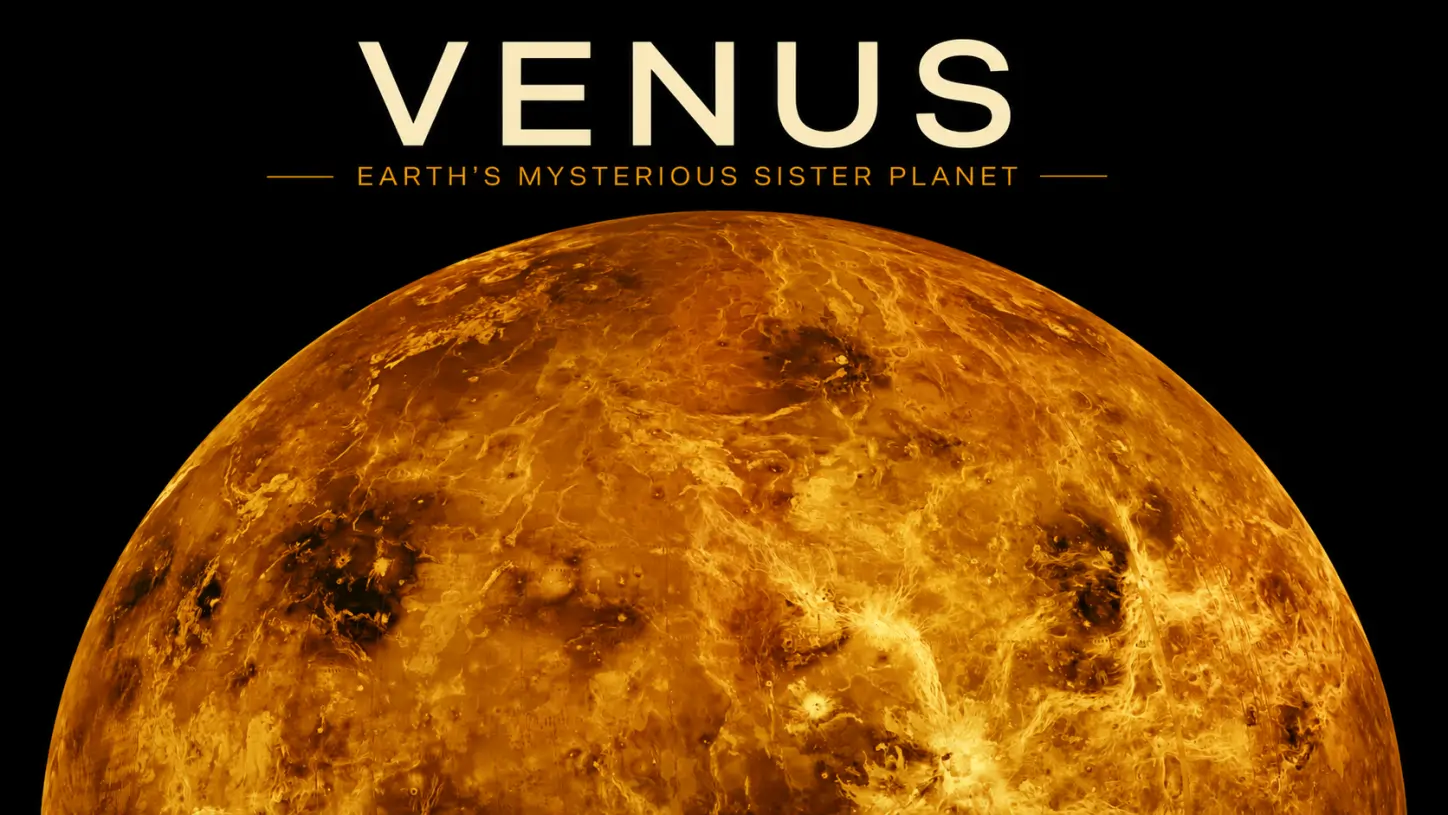
Venus planet images often use radar data
Many famous Venus planet images do not show what a human eye would see through the clouds. Instead, they are often based on radar mapping, especially from spacecraft missions that studied Venus’s hidden surface. Radar allows scientists to “see” through the cloud cover and map mountains, plains, volcanoes and impact features.
Venus has volcanoes and a dramatic surface
Venus’s surface is rocky, volcanic and extremely hostile. There are mountains, plains, lava flows and large volcanic structures. Although it shines beautifully in our sky, the surface of Venus is one of the most extreme environments in the Solar System.
Can you see Venus from Earth?
Yes, Venus is one of the easiest planets to see from Earth. In fact, it is often the easiest planet for beginners to identify because of its brightness.
From Tenerife, Venus can be especially impressive when seen from high-altitude viewpoints in or near Teide National Park. The island’s altitude, open horizons and reduced light pollution help make the experience more memorable.
However, Venus is not visible all night. Because it orbits closer to the Sun than Earth, it is usually seen either after sunset in the west or before sunrise in the east. During June and July 2026, Venus is especially relevant as an evening object after sunset.
Why is Venus so special?
Venus is special because it is both beautiful and extreme.
From Earth, it looks calm and brilliant — a shining point of light in the twilight. But scientifically, Venus is a hostile world with intense heat, thick clouds, crushing pressure and a runaway greenhouse effect.
This contrast makes Venus one of the most powerful planets to explain during a guided night sky experience. It reminds us that the night sky is not just decorative. Every bright point has a story, a physical reality and a place in the wider structure of the Solar System.
Is Venus an “air planet”?
Some people search for terms such as “air planets”, but Venus is not an air planet. In astronomy, planets are usually described as rocky planets, gas giants or ice giants.
Venus is a rocky planet, like Mercury, Earth and Mars. It has a solid surface, although that surface is hidden beneath thick clouds. Its atmosphere is extremely dense, but that does not make it a gas planet like Jupiter or Saturn.
So, if you are asking whether Venus is made of air, the answer is no. Venus is a rocky world with a very thick atmosphere.
What about “Venus de Willendorf material”?
Some searches for “Venus” refer not to the planet, but to the famous prehistoric figurine known as the Venus of Willendorf. That object belongs to archaeology and art history, not astronomy.
The Venus discussed in this article is the planet Venus — the bright object visible in the sky from Tenerife during summer 2026. The two share a name because “Venus” has long been associated with beauty and mythology, but they are completely different subjects.
Jupiter, Mercury, Mars and Saturn in summer 2026
Although Venus is the main focus for many evening stargazers in summer 2026, other planets may also be part of the season’s sky.
Jupiter in the evening sky
Jupiter is another bright planet and can be visible in the evening sky during part of June and July 2026. It is usually second only to Venus in brightness among the planets visible to the naked eye.
Through a telescope, Jupiter can be especially rewarding. Depending on conditions and timing, observers may see its four largest moons — Io, Europa, Ganymede and Callisto — appearing as tiny points of light beside the planet.
Mercury low in the west
Mercury can be visible in June 2026, but it is always more challenging. Because Mercury orbits very close to the Sun, it never appears far from the solar glare. From Tenerife, it may be visible low in the western sky shortly after sunset during favourable dates.
For visitors, Mercury is a satisfying planet to spot precisely because it is elusive. A clear horizon and expert guidance make a big difference.
Mars before dawn
Mars is less relevant for most evening tours in June and July 2026 because it is mainly a pre-dawn object. That means it is better placed for early risers rather than evening stargazing guests.
Saturn before dawn
Saturn is also more of a pre-dawn object in early summer 2026, becoming more prominent later. When visible through a telescope, Saturn is one of the most memorable planets because of its rings.
What else can you see from Teide in summer?
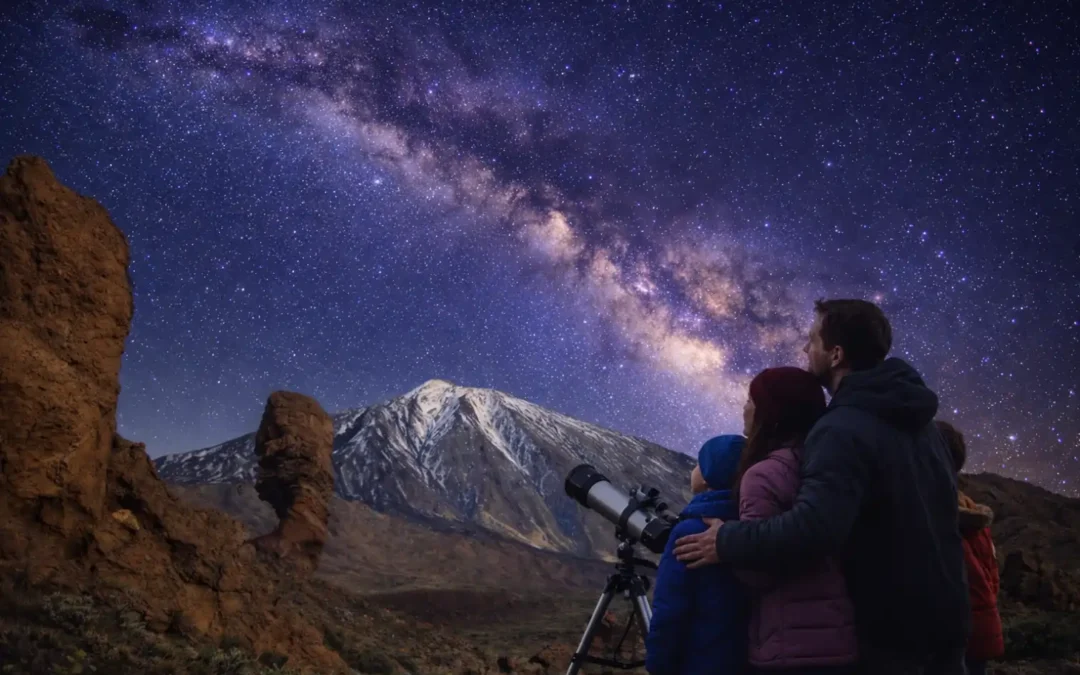
Planets are only part of the show. Summer is one of the best times of year to experience the Tenerife night sky because the Milky Way can be visible under dark conditions, especially when the Moon is not too bright.
From Teide National Park, visitors may also enjoy:
- the Summer Triangle: Vega, Deneb and Altair;
- Scorpius and the red star Antares;
- Sagittarius, in the direction of the Milky Way’s core;
- star clusters and nebulae through telescopes;
- occasional meteors, especially around the Perseids in August.
The exact view changes from night to night, which is part of the beauty of astronomy. No two stargazing sessions are exactly the same.
Why see Venus and the planets with Teide by Night?
You can look up from almost anywhere in Tenerife and see bright objects in the sky. But understanding what you are seeing is different.
A guided Teide by Night experience helps visitors:
- identify planets such as Venus and Jupiter;
- understand the difference between stars and planets;
- use telescopes to observe selected objects;
- learn the stories behind constellations and celestial movements;
- enjoy the night sky from a high-altitude environment away from much of the coastal light pollution.
For many guests, the best part is not simply seeing Venus. It is realising that the bright “star” above the horizon is actually a cloud-covered world with a surface hot enough to melt lead.
Practical tips for observing Venus from Teide
If you want to see Venus from Tenerife in summer 2026, keep these practical tips in mind.
Look west after sunset
In June and July 2026, Venus is best looked for in the western sky after sunset. It may appear before the sky is fully dark.
Choose a place with an open horizon
Mountains, buildings or trees can block low planets. Teide’s open volcanic landscapes are ideal because they provide wider views than many coastal areas.
Do not expect surface detail
Through normal telescopes, Venus appears as a bright disc or phase, not as a detailed surface. Its clouds hide the ground below.
Bring warm clothing
Even in summer, Teide is a high-altitude environment. Temperatures can drop quickly after sunset, so warm layers are important.
Let your eyes adapt
Avoid bright phone screens and white lights where possible. The longer your eyes adapt to the dark, the more detail you will see in the sky.
Venus and planets from Tenerife in summer 2026
Can I see Venus from Tenerife in summer 2026?
Yes. During June and July 2026, Venus is visible in the western sky after sunset and is usually one of the easiest planets to recognise.
Is Venus a planet or a star?
Venus is a planet. It looks like a very bright star because it reflects sunlight and is covered in reflective clouds.
Why is Venus so bright?
Venus is bright because it is relatively close to Earth, covered in reflective clouds and well positioned to reflect sunlight towards us.
What is the temperature on Venus?
The surface temperature of Venus is around 467°C, making it the hottest planet in the Solar System.
Can we see Venus’s surface from Earth?
No. Venus’s surface is hidden by thick clouds. Scientists study its surface using radar and spacecraft data.
What planets are visible from Tenerife in June and July 2026?
Venus and Jupiter are the most relevant evening planets. Mercury may also be visible low in the western sky in June. Mars and Saturn are mainly pre-dawn objects during this period.
Book a stargazing tour in Tenerife
Venus is only one part of the summer sky. From Teide National Park, a guided stargazing experience can help you discover planets, constellations, the Milky Way and deep-sky objects with expert explanations and telescope observation.
If you want to experience the summer sky from one of Tenerife’s most spectacular high-altitude landscapes, join TEIDE BY NIGHT® for an unforgettable evening under the stars.
Book your stargazing tour in Tenerife with TEIDE BY NIGHT®.